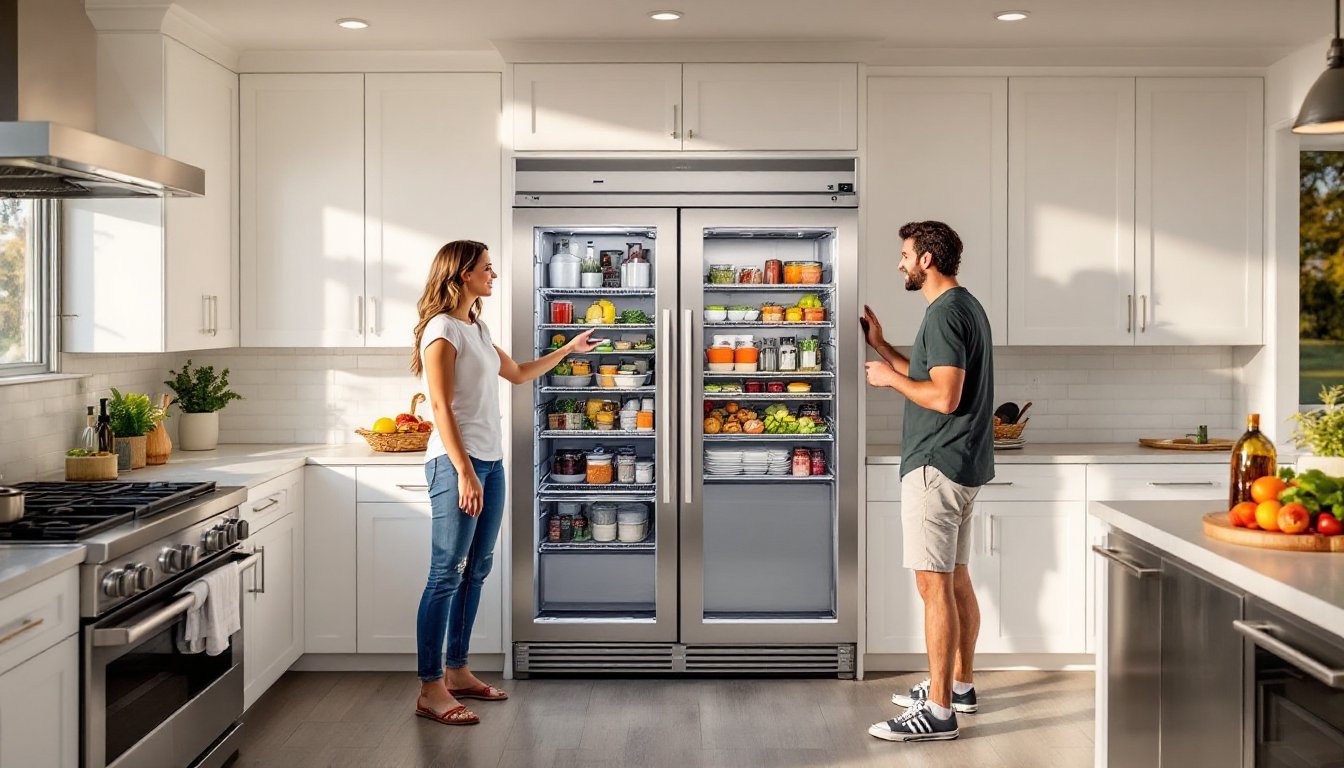
If you’re serious about your kitchen, whether you’re meal prepping for a family of six or hosting regular dinner parties, a commercial-grade refrigerator might sound like overkill. But Frigidaire commercial refrigerators are gaining traction among homeowners who want reliability and capacity that standard residential models can’t deliver. Unlike typical kitchen fridges designed for occasional use, a commercial Frigidaire refrigerator is built to handle heavy daily demand, maintain consistent temperatures, and last for decades with proper care. This guide covers what homeowners need to know before taking the plunge into commercial-grade cooling.
Table of Contents
ToggleKey Takeaways
- Frigidaire commercial refrigerators deliver 20+ years of durability compared to residential models that last 10–15 years, making them a smart investment for households with heavy cooling demands and frequent use.
- Commercial Frigidaire units offer 27–49 cubic feet of storage with fully adjustable shelving and separate temperature zones, providing flexibility that standard residential fridges cannot match.
- Monthly maintenance—cleaning condenser coils, checking door gaskets, and logging temperatures—is essential to prevent costly repairs ($300–$500) and extend the lifespan of your commercial refrigerator.
- Budget $2,500–$6,000 for a quality Frigidaire commercial reach-in refrigerator, plus $450–$1,200 for installation, electrical work, and delivery, but expect lower cost-per-year over 20 years of heavy use.
- Proper installation requires adequate space (3–4 inches clearance on sides and back), a dedicated electrical circuit, and strong flooring to safely support 800+ pounds, so plan your kitchen layout carefully before ordering.
Why Choose a Frigidaire Commercial Refrigerator for Your Home
Durability and Heavy-Duty Performance
Commercial refrigerators are engineered for environments where equipment runs 16+ hours daily. Frigidaire commercial units feature commercial-grade compressors, reinforced shelving rated for 250+ pounds per shelf, and stainless steel interiors that resist corrosion and staining far better than residential models. The cooling system is more robust, larger compressors and wider temperature ranges mean your food stays fresher longer, and the unit recovers quickly after you open the door repeatedly.
This durability translates to fewer repair calls and a longer operational lifespan. While a residential fridge typically lasts 10–15 years, a well-maintained commercial unit can run 20+ years. The investment pays dividends if you’re using it heavily. If your household goes through significant quantities of fresh produce, bulk proteins, or beverages, the constant cycling and temperature stability of a commercial Frigidaire refrigerator keeps everything in prime condition.
Storage Capacity and Flexibility
Commercial Frigidaire models come in configurations residential fridges simply don’t offer. You’ll find reach-in models with 27 to 49 cubic feet of storage, compared to a typical home refrigerator’s 20–25 cubic feet. More importantly, shelving is fully adjustable and removable, allowing you to customize configurations for whatever you’re storing, tall bottles, bulk vegetables, or meal prep containers. Many commercial units also offer separate temperature zones, so you can hold proteins at one temperature and produce at another without compromise.
For families who meal prep, run small catering businesses from home, or maintain a serious home bar, this flexibility is invaluable. You’re not fighting cramped shelves or fixed configurations designed for “average” households. Everything has its place, organized exactly how you need it.
Key Features to Look For
When shopping for a Frigidaire commercial refrigerator, prioritize these features:
Temperature Control: Look for models with tight temperature stability (±3°F or better). Commercial units maintain precise cooling even in busy kitchens. Digital thermostats are standard and allow you to set exact temperatures for different zones.
Shelving Material: Stainless steel shelves outperform coated wire or plastic: they’re easier to clean, won’t rust, and handle heavier loads. Check that shelves are numbered and dishwasher-safe for maintenance convenience.
Condenser Type: Air-cooled condensers work best in homes: water-cooled units are efficient but require plumbing connections. Most homeowners should stick with air-cooled unless your kitchen is unusually compact and has poor ventilation.
LED Lighting: Commercial Frigidaire models offer LED interior lighting that consumes less energy and produces minimal heat compared to fluorescent fixtures. This keeps your food cooler and your electric bill lower.
Warranty and Service: Commercial appliances often carry 3–5 year parts and labor warranties. Verify what’s covered and whether local service technicians are available in your area. Repair costs for commercial equipment can run $200–$500 per visit, so good local support matters.
Avoid models with unnecessary features (like ice makers in a reach-in cooler if you don’t need them): they add cost and create maintenance headaches. Stick with what you’ll actually use.
Installation and Space Requirements
Frigidaire commercial refrigerators demand more space and planning than their residential counterparts. First, measure your doorways, hallways, and kitchen entrance, most commercial units are deeper, taller, and wider than standard fridges. A 48-inch reach-in model might be 27 inches deep and 65 inches tall: confirm it actually fits before ordering.
Clearance is critical. The condenser needs 3–4 inches of clearance on the sides and back for air circulation. Many homeowners under-estimate this and end up with a unit that overheats because it’s crammed against cabinets. If your kitchen is tight, consider a narrower model (27–33 inches wide) rather than forcing a larger unit into insufficient space.
Floor strength matters too. A fully stocked 49-cubic-foot reach-in weighs 800+ pounds. Standard residential flooring handles this, but if your kitchen is on a raised deck or has weak subfloors, you may need reinforcement. Check your home’s floor framing or consult a contractor if you’re unsure.
Electrical: Commercial Frigidaire refrigerators typically require a dedicated 115V or 208V circuit (depending on the model). Don’t daisy-chain it with other appliances. If your kitchen lacks a nearby outlet, budget for an electrician to install one, a straightforward job costing $150–$400 depending on wire run and local rates.
Ventilation: Ensure your kitchen has adequate ventilation to carry away waste heat. A poorly ventilated space forces the compressor to work harder, shortening its lifespan and inflating energy costs. If your kitchen feels warm after cooking, ventilation is already a concern, address it before adding a commercial cooler.
Maintenance and Long-Term Care
The durability of a Frigidaire commercial refrigerator depends entirely on proper maintenance. Unlike residential fridges, commercial units require hands-on care.
Condenser coils need monthly cleaning. Dust and debris accumulate on coils, forcing the compressor to work overtime. Remove the access panel (consult your manual, every model is different), brush the coils gently with a soft brush, and vacuum loosened debris. Skip this, and you’re looking at $300–$500 repairs or premature compressor failure.
Gaskets and door seals matter. Check them monthly for cracks or warping. A failing gasket lets cold air escape, spiking energy use. Replacement gaskets cost $50–$150 and are a simple DIY swap.
Defrost system upkeep: If your model includes an auto-defrost feature, ensure the defrost drain isn’t clogged. Pour a small amount of warm water and vinegar down the drain line quarterly. A plugged drain causes ice buildup and temperature swings.
Temperature logging: Keep a basic thermometer inside your fridge and log readings weekly. A sudden 5-degree drift signals a problem before spoilage occurs. This simple habit saves money and food.
Stainless steel exteriors wipe clean with a damp cloth and mild soap. Avoid abrasive scrubbers that scratch the finish. For stubborn spots, a stainless steel cleaner (like Bar Keeper’s Friend) works well and costs a few dollars.
Most commercial Frigidaire units don’t require seasonal shutdown like some appliances. If you’re storing one seasonally, ensure it’s in a climate-controlled space (not an unheated garage) to prevent condensation and compressor damage.
Pricing and Budget Considerations
Expect to spend $2,500–$6,000 for a quality Frigidaire commercial reach-in refrigerator, depending on size and features. A 27-inch single-door model runs closer to $2,500: a 48-inch three-section unit can exceed $5,500. This is 3–4 times the cost of a residential side-by-side.
Where the value emerges is durability and longevity. A $3,000 commercial Frigidaire lasting 20 years costs $150 annually: a $1,200 residential unit lasting 12 years costs $100 annually, but you’ll replace it twice while the commercial unit still runs. Over a 20-year span, commercial makes financial sense for heavy users.
Energy costs vary. A commercial refrigerator typically runs $30–$50 monthly to operate (more in hot climates). This is higher than a residential model, but the tradeoff is consistent temperature control and less frequent door cycling to find items.
Don’t forget secondary costs: delivery and installation ($300–$800), electrical work ($150–$400), and optional accessories like additional shelving ($75–$200 per shelf). Budget conservatively, total investment can easily reach $4,000–$7,000 once everything’s factored in.
If you’re hunting for guidance on product durability and tested appliance reviews, Good Housekeeping regularly evaluates commercial-grade refrigerators for home use. For kitchen design ideas that integrate large appliances, The Kitchn offers practical insights on layout and storage solutions. And if you need hands-on installation help or troubleshooting, Family Handyman has repair and setup guides that translate commercial principles to residential kitchens.
Shop around, prices vary significantly by dealer, and seasonal sales (especially late summer and fall) can save 10–15%. Get quotes from restaurant supply companies and specialty appliance retailers, not just big-box stores: they often have better pricing on commercial units.